

Simple & Super Geek Top Tips for Composting
Whether in your garden or field

Following from last week’s piece on making feeds to immediately nourish your plants, this week it’s on composts.
It does take a little shift in thinking about your garden, especially if it is small. People ask whether composting is worth it, when you can buy bags of the stuff. I hope I can inspire you to fall in love with composting and find space for it.
We’ve got this idea that sterilised bags of ‘clean’ weed free compost is better. But that which we make from our own cuttings, weeds and emptying pots even of dead plants, is full of the exact same soil microbes, nutrients and minerals in our gardens. To give them away in a green bin is giving away the exact gold that your plants would love to retain. If you think about it, those weeds or seeds, petals and dying plants would go back to the soil if you did nothing anyway. By ‘tidying up’ and putting them away in the heap, you not only enjoy the process, whilst that organic matter decomposes away from sight for you to put back onto the beds as a compost that is teaming with life and goodness or grow your future plants in as seedlings.
I have found some lovely composters for any sized garden here, here and here. For really tiny courtyard or balconies this is brilliant!
For the beginner -
If you have never composted before, here are my top tips -
The most important thing about composting is to have at least a near equal mix of browns and greens.
If you only put loads of grass in, you won’t get lovely crumbly rich compost.
Greens - Grass, dead flowers from a vase, weeds, raked up leaves.
Browns - chopped up branches of hedge clippings, prunings (chop it all up into pieces no bigger than a few inches) also shredded paper works, ripped up plain brown cardboard, egg boxes
Try to layer up just a few inches of each type - brown at the bottom, then green and so on. If you have some old compost from pots, add this as a layer too.
If the material is dry, which it is likely to be, water the heap until it is quite soggy when you add new layers. This will get the material to mix and start decomposing, heating it up. Then let the microbes do the rest!
When the compost heap is full, leave it for 6 months or so. Check to see if it’s very dry - add water again - the composting actually happens if it’s damp.
Open it up and have a look. I bet you’ll have lovely material to use.
Then use! If you need to start a new heap, a second composter is ideal, otherwise bag up your compost and store it until you have a use for it.
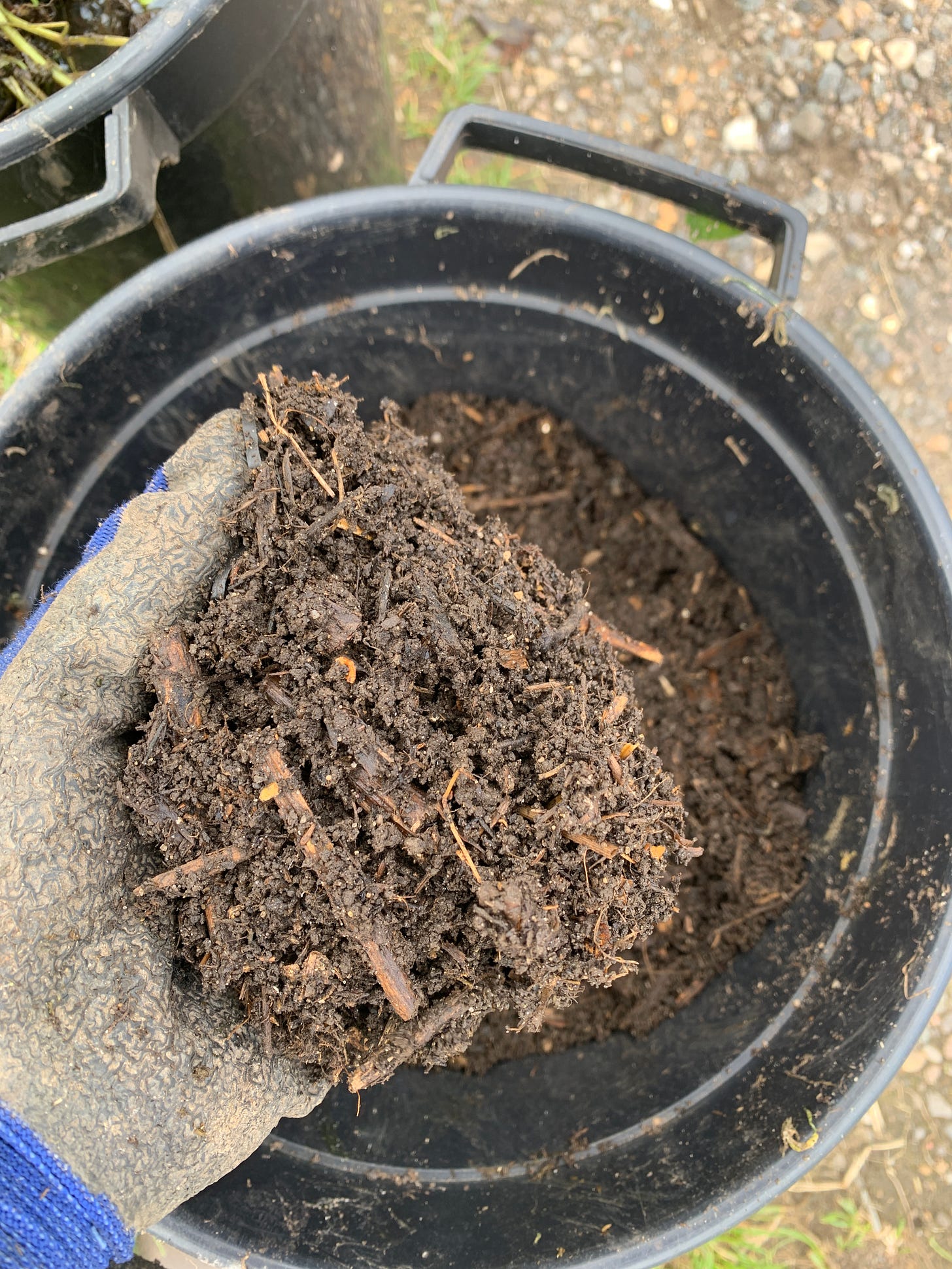
Lovely sweet smelling delicious compost.
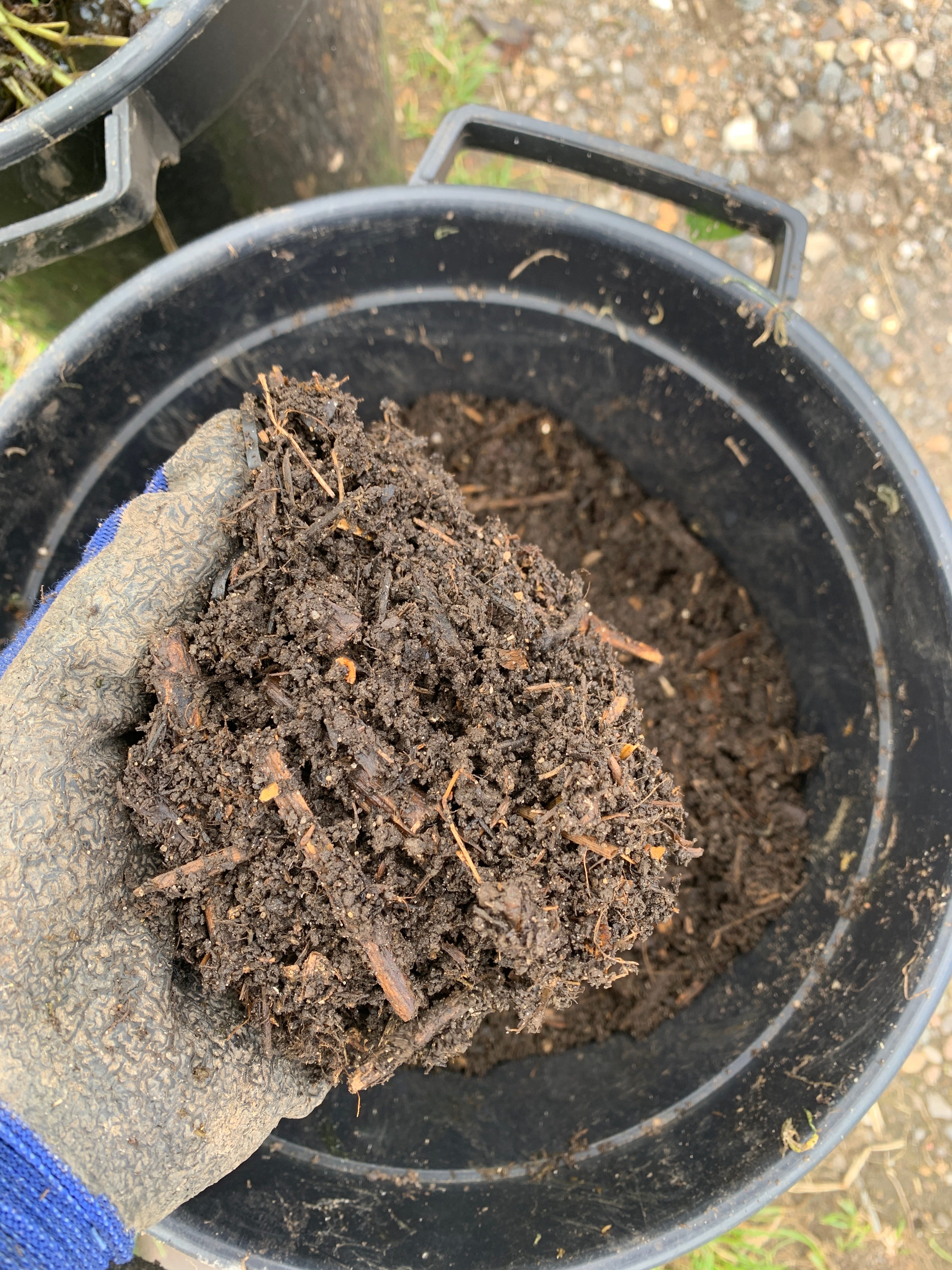
For the super composter -
Advanced tips, for larger spaces and much faster composting.
What this is not - no need for those accelerator products, turning heaps or even compost bays. But a little bit of composting geekery, thermometers and whether or not to add weeds.
This is super fast composting - once build and ready in 6 months OR fast 8-10 week turnaround (yes really).
This is how I used to compost -
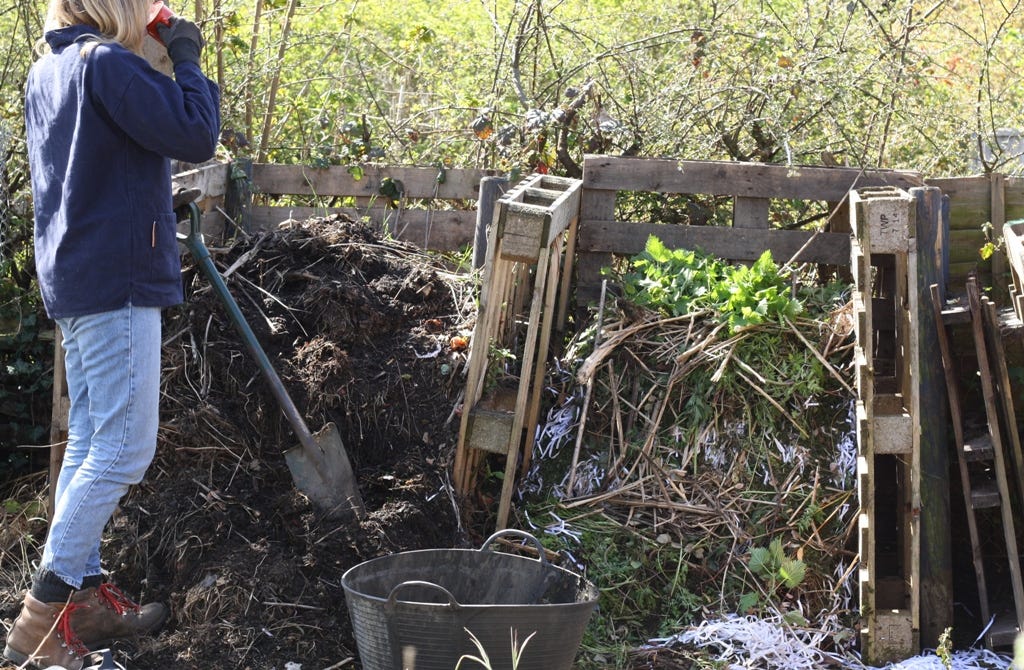
It was ugly, I turned the heaps in the next bay at least once a year. I’d be waiting to turn heaps and urging them to decompose faster. I’d then have to somehow get compost from the bottom of the heap. No wonder home composting can seem like too much like hard work. I made it seem like a penance.
Now, just like I describe above. I fill up heaps, no longer in pallet towers, and no longer turn. I can get compost from the top as it all develops at the same time. Much less work, much better compost.
