
The long Easter weekend celebrations traditionally mark a special point in the calendar for a long weekend of gardening. Brighter days and warmer weather creates an explosion of growth all around us. Something has broken through the clouds this week, the sun is slightly warmer and higher in the sky.
Pretty much anything can be sown now, inside and out. There is around 6 weeks until the end of the frosts which is about the time a plant takes to grow from seed to planting out. For many tender plants like cosmos, sunflowers and zinnias, this gives you just the right amount of time to sow and tend a plant until it is ready to be planted out as night temperatures stay above zero.
If your focus is on growing flowers, I’d like you to also consider growing some different vegetables and fruit amongst your flowers.
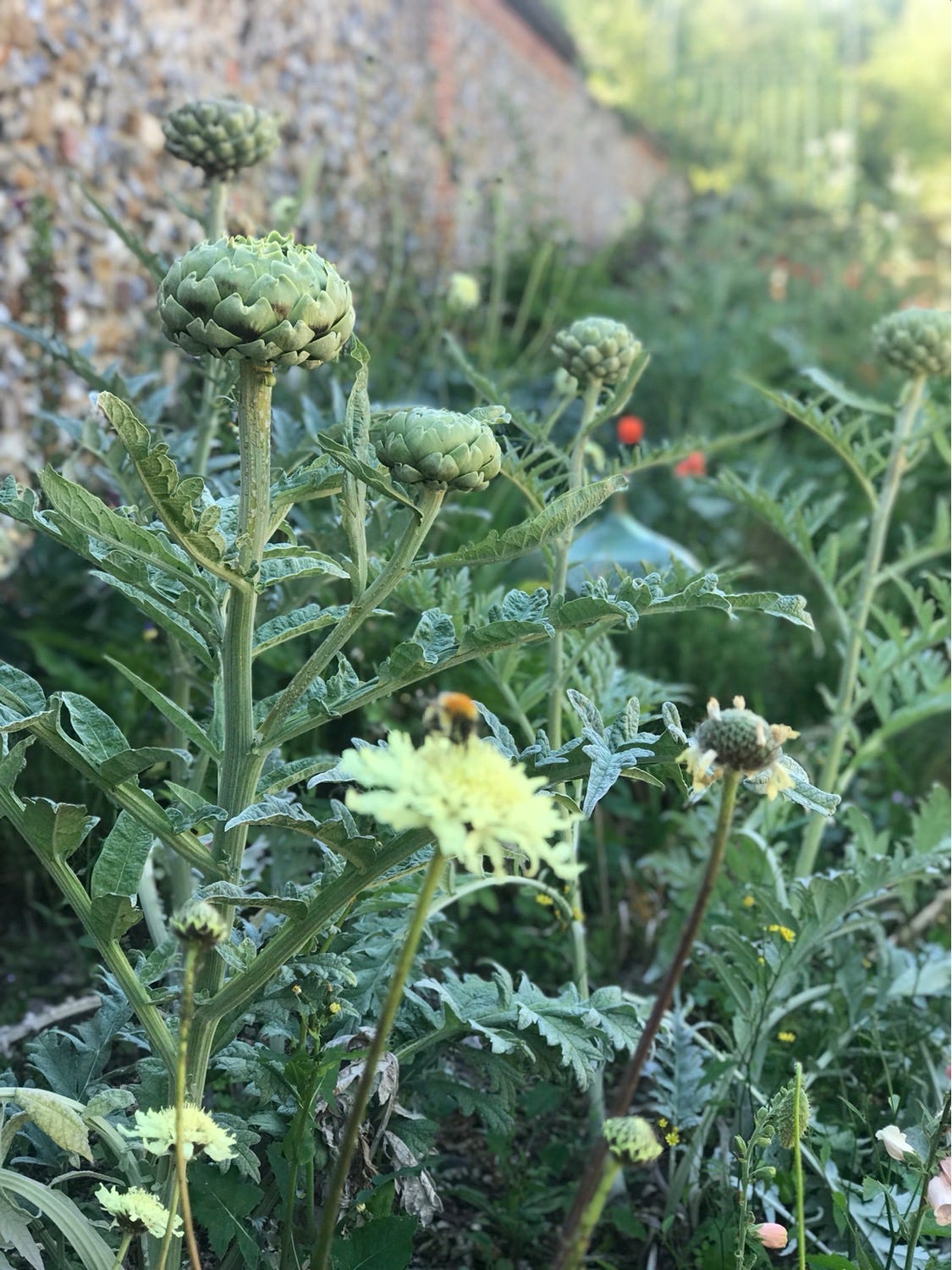
Growing a wide variety of different plants from seed is one of the keys to excellent soil health. We are beginning to understand how important this is but did you realise that actually growing food for yourself and flowers for the table actually improve the soil? And in turn improves our environment. The best part, it improves the taste (and no doubt your own gut health too!)
We grow a lot of fruit and vegetables here, mostly for meals on the farm for classes, workshops and farm days. Food comes a very close second to the flowers here. But I also used the decorative blue flowers of peas, herbs and tendrils of beans in arrangements. Though, much more than feeding us and my creativity, these plants also contribute to a healthier soil and better plant health all over. A classic win win.
As all plants grow, they take in carbon dioxide, actively removing it from our atmosphere, converting it into carbohydrates for food for themselves and also sending a huge amount out into the soil for the microrganisims to consume. In return, fungal networks respond to plants needs by exchanging water, minerals and nutrients. This mutual exchange and symbiotic relationship is essential to healthy soil and healthy plants.
One does not exist without the other.
And the more variety in the garden, allotment, and farm, the more variety of microbes and fungi feeding those plants and protecting them from pests and disease. It is utterly mind boggling and wonderful to know all this is going on beneath our feet. All we need to do is make sure we don’t do anything to kill the microbes in the soil. That includes not using any chemicals, keeping the soil covered with plants (even weeds will take in carbon and keep the soil alive) and occasionally add some homemade compost to stimulate microbial activity.
That’s why I would encourage everyone, to sprinkle seeds in among the shrubs and perennial to create colour this summer and food for your plate. We are growing kale among our sweet peas, calendula and sunflowers around our tomatoes and radishes between the cosmos. I can’t wait for the plots to be buzzing with insects, scents and productivity.
The soils are being warmed, weed growth and self sown seedlings are germinating which means that the soil bacteria is being stimulated again. At last.
This weeks top tasks on the plots -
Transplanting a huge amount of seedlings sown in March and sowing much more for successional sowing. One hit wonders like nigella, many sunflowers and bupleurum need sowing every few weeks for a continual crop of plants.
Edging the beds surrounded by grass paths in the walled garden. Over the year, the grass encroaches into the beds, reducing the width. We edge them once a year and save all the turf cuttings. These are laid upside down for the grass to decompose and use for our homemade potting compost recipe.
Planting out late summer bulbs such as nerines, acidanthera and ixia.
I’m harvesting -
Narcissus, hellebores, fruit blossoms, scilla, tulips, fritillary, anemones, hyacinths and amelanchier.
Edible Flowers -
Primroses, tulips and hyacinth


